
In 2023, the Pay Transparency Directive introduced the first legal definition of intersectional discrimination in EU law. With this significant milestone, it may seem as if doctoral research on intersectionality in EU law is superfluous. This could not be further from the truth.
Earlier this year, I had the opportunity to highlight how truly embracing intersectionality – a concept/theory/analytical framework with roots that I locate in the legal tradition of Critical Race Feminism – calls for the normative grounding and prevailing legal doctrine that underpins EU equality law to be rerouted. In other words: for the new legal definition of intersectional discrimination to yield tangible results for multiply marginalised groups in the Court of Justice of the EU’s future equality jurisprudence, EU equality law’s normative and doctrinal landscape needs adjusting.
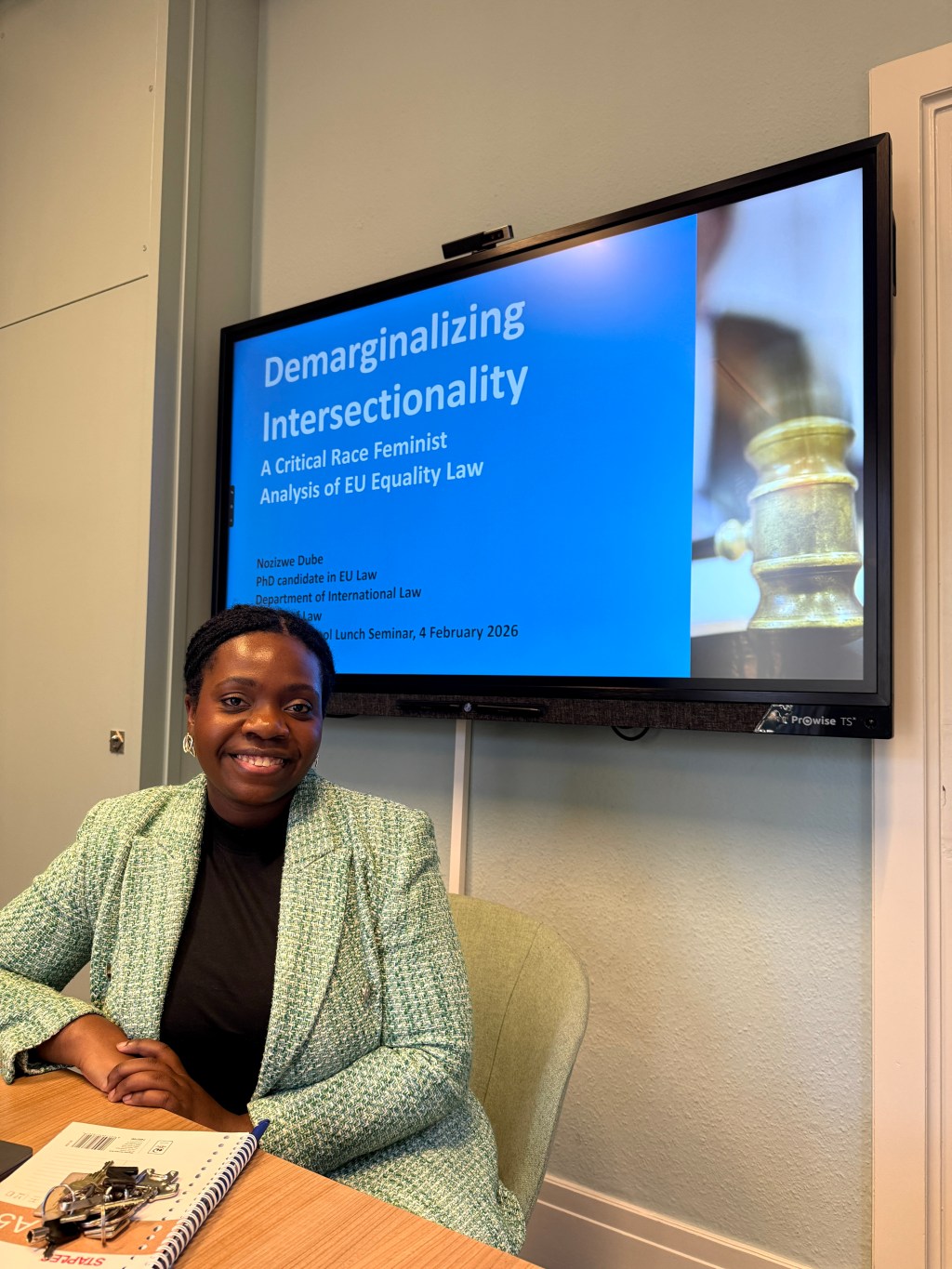
Earlier this year, I shared my insights on the form that this rerouted EU equality law framework could take during a Law Graduate School lunch seminar, where I received very insightful feedback from Prof. Dr. Diamond Ashiagbor and the other attendees. As I near the end of my doctoral research, such moments to share and sharpen my insights are particularly enriching.
Law Graduate School Seminar on Intersectional Discrimination in EU Law
 NOZIZWE DUBE
Leave a comment